

 Shop all Arturia
Arturia AudioFuse 16Rig USB Audio Interface
In Stock
Free Next-Day Air
Est. delivery by Tue, Sep 22


 Shop all PreSonus
Find car audio installers near you, ratings, phone, and directions.
These are made to work together, add them to your cart in one click.
 This item
PreSonus Studio 1824c USB-C Audio Interface
$852.40
This item
PreSonus Studio 1824c USB-C Audio Interface
$852.40
 Mogami PLATINUM STUDIO 50 50-Foot XLR Microphone Cable
$259.95
Mogami PLATINUM STUDIO 50 50-Foot XLR Microphone Cable
$259.95
 PreSonus HD9/HP4PACK Four-Person Headphone Monitoring Bundle
$234.95
PreSonus HD9/HP4PACK Four-Person Headphone Monitoring Bundle
$234.95
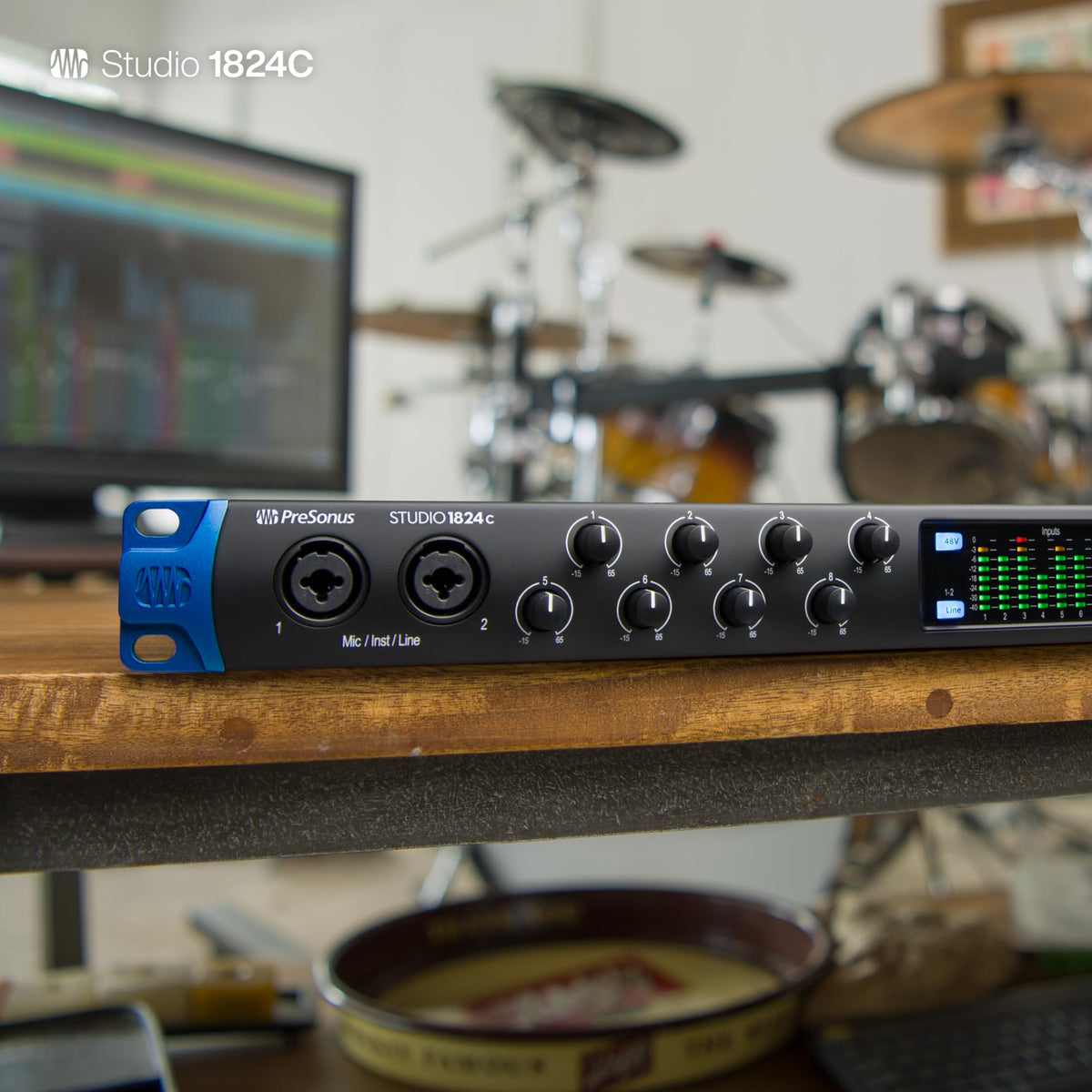
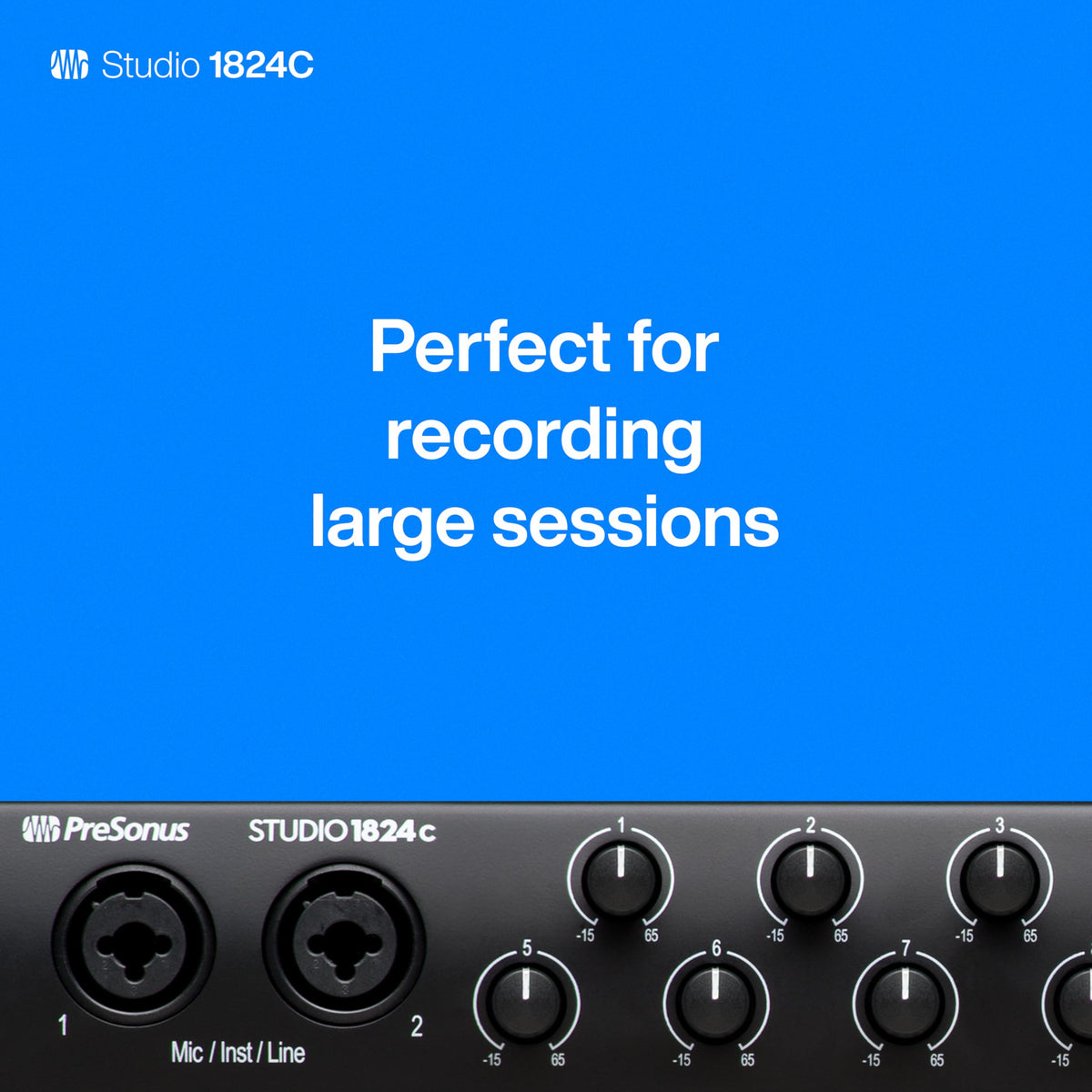
The PreSonus Studio 1824c is a 24-bit/192 kHz USB-C audio interface designed for recording sessions that require multiple microphones, instruments, monitor outputs, and headphone feeds. Its eight onboard XMAX Class A microphone preamps make it well suited to tracking drums, bands, podcasts, and larger home-studio productions. It combines analog, digital, MIDI, and monitor-control connections in a compact 1U-width format.
Two front-panel combo inputs accept microphone, instrument, or line-level sources, while six additional rear combo inputs handle microphone or line-level gear. This arrangement gives guitarists, bassists, keyboard players, vocalists, and engineers flexible access to the first eight recording channels. The interface supports up to 18 simultaneous inputs and 20 outputs, with channel availability depending on sample rate and connected digital equipment.
The Studio 1824c uses 24-bit converters with up to 192 kHz sample-rate support and a specified 114 dB converter dynamic range. Its XMAX preamps provide up to 80 dB of gain for microphone and instrument sources, helping accommodate a broad range of recording setups. Dedicated input and main-output LED metering provides direct visual level feedback during tracking and playback.
For monitoring, the onboard 18x8 DSP mixer supports flexible routing and near-zero-latency monitoring through Universal Control. Four discrete monitor mixes can be created for performers and control-room listening, while front-panel main-output level, Mono, and Mute controls make everyday monitor management straightforward. Two independent stereo headphone outputs each have their own level control.
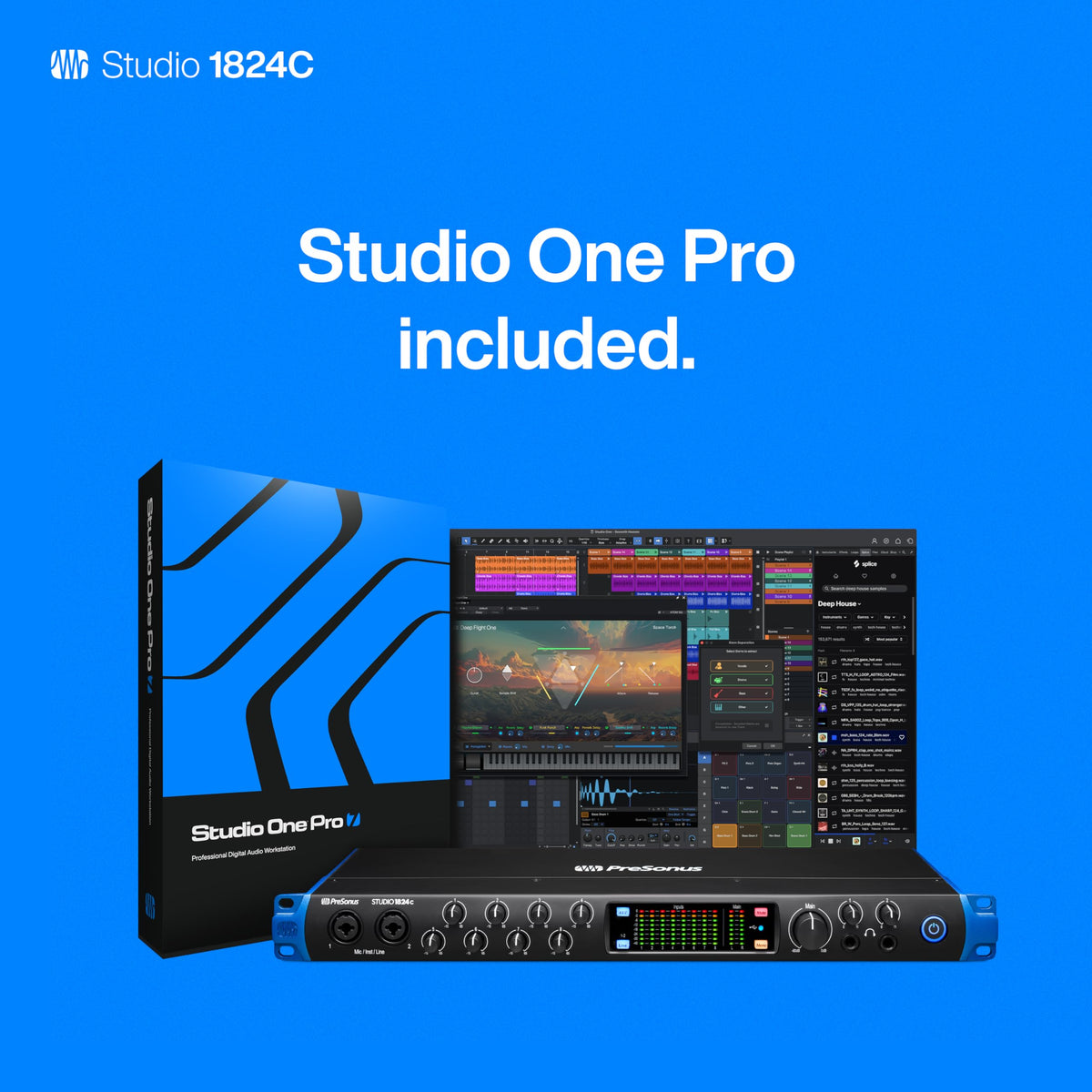
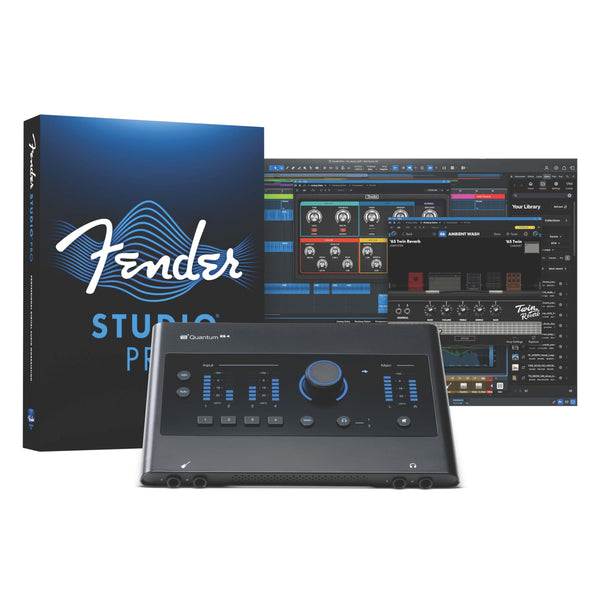
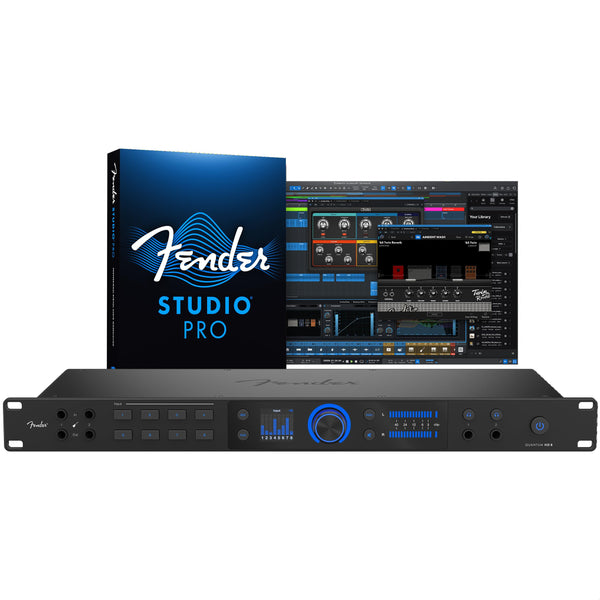
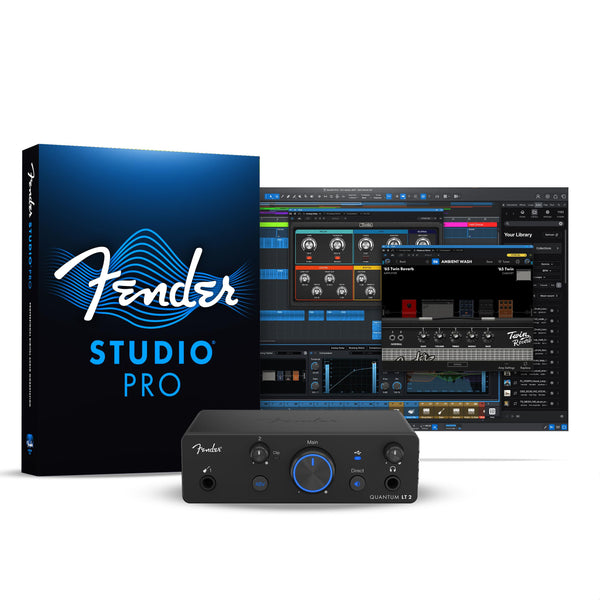
The Studio 1824c can expand through ADAT optical I/O, making it practical to add compatible external mic preamps or converters as a studio grows. Stereo S/PDIF I/O, MIDI input and output, and BNC word-clock output support integration with digital processors, instruments, and synchronized studio hardware. Hardware registration includes a perpetual Fender Studio Pro software license.
The Studio 1824c has a black, 19-inch-wide, 1.75-inch-high chassis with front-panel combo inputs, gain controls, headphone controls, monitoring controls, and ladder-style LED meters. Rear-panel connections organize the additional combo inputs, balanced outputs, digital I/O, MIDI ports, USB-C connection, word-clock output, and external power connection. Its layout keeps frequently adjusted recording and monitor controls accessible from the front.
Connect the interface to a compatible computer using the included USB-C-to-C or USB-C-to-A cable, then install Universal Control and select the Studio 1824c in the recording software. Use inputs 1 and 2 for microphones, instruments, or line-level sources; inputs 3 through 8 accept microphone or line-level signals. Add compatible ADAT equipment when more input channels are needed, and use the balanced main outputs, line outputs, and two headphone outputs to build monitor and cue-mix systems.
| Product Type | USB-C audio interface |
|---|---|
| Model | Studio 1824c |
| Color | Black |
| Simultaneous I/O | Up to 18 inputs / 20 outputs |
| I/O at 192 kHz | 8 inputs / 8 outputs |
| Analog Mic Preamps | 8 XMAX Class A |
| Front Combo Inputs | 2 mic/instrument/line |
| Rear Combo Inputs | 6 mic/line |
| Digital Resolution | 24-bit |
| Supported Sample Rates | 44.1, 48, 88.2, 96, 176.4, and 192 kHz |
| A/D Converter Dynamic Range | 114 dB |
| D/A Converter Dynamic Range | 114 dB |
| Computer Connectivity | USB-C |
| USB Compatibility | USB 2.0 and USB 3.0 backward compatible; USB 1.1 unsupported |
| Microphone Input Connection | Balanced XLR female combo |
| Microphone Input Frequency Response | 20 Hz–20 kHz, unity gain |
| Microphone Input Impedance | 1.4 kOhms |
| Microphone Input Dynamic Range | 110 dB A-weighted, minimum gain |
| Microphone Input EIN | -128 dBu A-weighted, 20 kHz bandwidth, Rs=150 Ohms, maximum gain |
| Microphone Input THD+N | 0.005% at 1 kHz, 0 dBu, unity gain |
| Microphone Input Gain Range | 80 dB |
| Microphone Input Maximum Level | +16 dBu, minimum gain |
| Phantom Power | 48V, greater than 10 mA per channel; global switching |
| Line Input Frequency Response | 20 Hz–20 kHz, unity gain |
| Line Input Impedance | 10 kOhms |
| Line Input Dynamic Range | 112 dB A-weighted, minimum gain |
| Line Input THD+N | 0.005% at 1 kHz, +18 dBu, minimum gain |
| Line Input Gain Range | 40 dB |
| Line Input Maximum Level | +21 dBu balanced, minimum gain |
| Instrument Input Frequency Response | 20 Hz–20 kHz, minimum gain |
| Instrument Input Impedance | 1 megohm |
| Instrument Input Dynamic Range | 112 dB A-weighted, minimum gain |
| Instrument Input THD+N | 0.020% at 1 kHz, +10 dBu, minimum gain |
| Instrument Input Gain Range | 80 dB |
| Instrument Input Maximum Level | +15 dBu unbalanced, minimum gain |
| Main Output Connection | Two balanced 1/4-inch TRS female, DC coupled |
| Main Output Maximum Level | +18 dBu balanced |
| Main Output Frequency Response | 20 Hz–20 kHz, unity gain |
| Main Output Dynamic Range | 108 dB A-weighted, unity gain |
| Main Output THD+N | 0.004% at 1 kHz, -1 dBFS, unity gain |
| Line Outputs | Eight balanced 1/4-inch TRS female, DC coupled |
| Line Output Maximum Level | +18 dBu balanced |
| Line Output Frequency Response | 20 Hz–20 kHz |
| Line Output Dynamic Range | 108 dB A-weighted, -60 dBFS |
| Line Output THD+N | 0.004% at 1 kHz, -1 dBFS, unity gain |
| Headphone Outputs | 2 stereo 1/4-inch TRS active stereo outputs |
| Headphone Output Power | 150 mW per channel into 60 Ohms |
| Headphone Frequency Response | 20 Hz–20 kHz, unity gain |
| Headphone Dynamic Range | 103 dB A-weighted, 1 kHz, unity gain |
| Headphone THD+N | 0.250% at 1 kHz, 150 mW, unity gain |
| Headphone Impedance Range | 32–600 Ohms |
| ADAT Optical I/O | 8 channels at 44.1/48 kHz; 4 channels at 88.2/96 kHz |
| ADAT at 176.4/192 kHz | Not available |
| S/PDIF | Stereo digital input and output |
| MIDI I/O | Dual 5-pin female DIN |
| Word Clock | BNC word-clock output |
| DSP Monitor Mixer | 18x8 onboard DSP mixer |
| Monitor Mixes | Four discrete near-zero-latency monitor mixes |
| Metering | 10 ladder-style 8-LED meters: 8 input and 2 main output |
| Main Monitor Controls | Front-panel level, Mono, and Mute controls |
| Power Requirement | 100–240 VAC, 50–60 Hz external power supply |
| Height | 1.75 inches (44.45 mm) |
| Width | 19 inches (483 mm) |
| Depth | 5.5 inches (140 mm) |
| Weight | 4.8 lb (2.2 kg) |
| Included Cables | 1 m USB-C-to-USB-C cable and 1 m USB-C-to-USB-A cable |
| Included Software | Fender Studio Pro perpetual license with hardware registration |
| Warranty | 2-year limited non-transferable warranty |
Yes. It has eight onboard microphone preamps, allowing up to eight analog microphone sources at once. Compatible ADAT equipment can add more digital input channels at supported sample rates.
Yes. Inputs 1 and 2 accept microphone, instrument, or line-level sources. The instrument inputs have 1 megohm input impedance.
The interface connects through USB-C and is backward compatible with USB 2.0 and USB 3.0 connections. USB-C-to-USB-C and USB-C-to-USB-A cables are included.
It has two stereo headphone outputs with individual level controls. Its onboard DSP monitor mixer can create four discrete near-zero-latency monitor mixes.
Hardware registration includes a perpetual Fender Studio Pro license. Universal Control software is used for device control and monitor mixing.
Yes. The Studio 1824c includes ADAT optical I/O, stereo S/PDIF I/O, MIDI input/output, and a BNC word-clock output. The BNC connection can transmit word clock to other compatible digital devices.

PreSonus Studio 1824c USB-C Audio Interface
Shop all Arturia
 Shop all Arturia
 Shop all Arturia
 Shop all Arturia
 Shop all PreSonus
 Shop all PreSonus
 Shop all PreSonus
 Shop all PreSonus
 Shop all PreSonus
 Shop all PreSonus
 Shop all PreSonus
 Shop all PreSonus
 Shop all PreSonus
 Shop all Fender
 Shop all Fender
 Shop all Fender
 Shop all Fender
 Shop all Rode
 Shop all Shure
 Shop all Shure